Being Wrong is Alright

The biggest professional compliment I’ve ever received came during the hardest stretch of my career.
I was the Midwest Director of Human Rights Watch - and at the time it was the most money and the best title I’d had to date. I’d heard from people I trusted that the organization had a much “tougher” (read: toxic) culture than anywhere I’d worked before, but I was still young enough to believe in my own terminal uniqueness… the thought that I was too special for something like that to impact me. Up til then, I’d never had a bad work experience, and I believed once people saw how charming I was, they’d be smitten.
Needless to say, I was wrong. Instead of walking into a work environment that felt like some warm, funny workplace sitcom, I ended up on the set of Mean Girls.
So I did what I thought best: I channeled my inner Lindsay Lohan and decided if I couldn’t beat them, I’d join them. That worked, for a minute or two. Until it didn’t.
At some point, in utter frustration, I went out for a drink with someone I trusted - someone who ran in the same circles as the people I felt had treated me so badly - but always managed to keep a healthy distance from it all. That night she gave me an incredible compliment. She said no one she knew, except her husband (who she absolutely adored), took feedback and worked to incorporate it as well as I did.
As the night and wine went on, I wrapped myself in the warm embrace of that acknowledgment. But the next morning, harsh reality hit: I could incorporate every piece of feedback I received, and it still wouldn’t be enough. Because the core issue wasn’t the feedback. It was that I was trying to fit into a culture that didn’t want what I actually had to offer. Which meant I wasn’t being my authentic self, or honest with myself and the people I worked with.
So I left. At the time, I felt I was doing so because I was being pushed out. And for a long time, my story about that place was simple. They were bad. I was wronged. So much so that I fanticized about the exposé I would write. The ironic tale of a human rights organization that allowed such unbecoming conduct within its own hallowed halls - a place that ran on an underlying belief that the ends (usually measured by how much money was raised) always justified the means. I could already see Kate McKinnon starring as me in the mini-series.
But the harder truth, one that took me about a year to admit, was even though I felt treated unfairly, I needed to own that in the process I became a different type of mean girls myself. I was petty when I felt threatened. I protected myself in ways that hurt other people. And while I could try to defend myself by listing every reason the environment was unhealthy, none of it changes the fact that I let it bring out the worst in me.
It has been almost a decade since then and in that time I’ve tried to make amends to all the people who didn’t deserve to get pulled into the web of madness I created to save myself.
In addition, I’ve often gone back to that compliment about taking feedback well. And am grateful to have heard it many times since then. Staying open instead of defensive is a real skill. But over time, I’ve come to understand it’s not the whole equation.
We can be endlessly adaptable and still never actually change, if we never own what we did with what we heard. Adapting without accountability is just performance. It took me years to understand that the two only add up to something real, something like actual bravery, when they’re coupled together.
That’s the part of my Grover piece I wrote a few weeks ago that I keep coming back to: the monster at the end isn’t scary once you finally turn the page and look. But turning the page isn’t the brave part. Looking honestly at what’s actually there, and admitting it out loud, is.
The one word most often used to describe me, both personally and professionally, is connector. I hope funny, passionate, committed, and most important, grateful, rank high on that list too. But a word I rarely expected people to use is brave, and yet it’s come up so often lately that it’s the impetus for this piece.
Nothing prepared me for the outpouring of calls, texts, and notes of admiration after my Facebook and LinkedIn posts, simply owning that I’d made a mistake in endorsing Graham Platner.
My connection to Graham, and my hopes for his candidacy, has come up before in my Substack. What I focused on each time was less about him and more about a collective challenge to readers: join me in believing in redemption and hope.
I’d like those words to show up on my values list too.
But in hindsight, the one value that may matter most - the one I try to inhabit and model - and the one I believe most people are reacting to and equating with bravery - is accountability.
That word is far less sexy than the ones above. It doesn’t show up in the center of cool-looking word clouds of interesting people. Or in the obituary of the rich and famous. But I’ve learned it’s far more closely related to humility and humanity than it is to regret or mistake.
And perhaps most important, there is no authentic relationship in my life without it.
That was one of the first of many hard lessons Ann and I learned when we started couples counseling, early in our relationship. While we haven’t gone together in two decades, the tools and insight we picked up side by side on that couch still resonate daily. Case in point: we celebrate our 25th wedding anniversary - and 28 years together - next month.
The thing about accountability is, like a meaningful apology, the only one you really have to answer to is yourself. The simple difference between “you made me feel sad” and “I felt sad when that thing happened between us” is light years wide. And yet that muscle of ownership - is something most people shy away from ever exercising, let alone building.
I’d like to believe I carry those lessons into every relationship I have, not just the one with my wife. But as is the way with human beings, I sometimes fall back into old behavior, shaped by what I saw modeled growing up.
I was raised in a generation where parents’ most common answer was “because I said so.” My parents never apologized. Never. My theory: beyond simply not being something parents did back then - my parents were also immigrants who believed admitting vulnerability was admitting weakness. And weakness was the last thing someone already marginalized would, or frankly could, allow themselves to show.
Which made the concept of accountability unimaginable. The truth is mastering the accountability skill isn’t easy for anyone. I’d like to think I’ve gotten better at it because I practice it. But any practice, like Pilates (which my abs and ass are feeling today), can be painful. And because the results aren’t immediate, it’s easy to question whether it’s worth it.
Rarely do accountability or fallibility offer instant gratification. Couple that with the fact that in this day and age, so few leaders, from the President on down, admit mistakes or not knowing, and we’ve raised an entire generation paralyzed by the thought of acknowledging fault.
Which makes it easiest for people fall back on a binary: there is right and wrong. A victim and villain. And it’s not just world leaders. It shows up in friend breakups, where we feel we have to pick a side. A teacher who doesn’t give your kid a good grade must be bad at their job. Or the deep seeded fear that giving someone else grace or credit will somehow take away from how others see you.
Even some of my dearest friends, the ones who held me up through the toughest times at HRW, found it hard to let me admit my own fault. They kept going back to “but they were so bad to you.” Both can bet true. The multiple truths of that toxicity having been my experience and owning what my role was within it.
It is that learning that I have tried to incorporate most this past decade. In doing so, in showing up as my authentic self - I’ve been called brave more and more often. Which made me terribly uncomfortable. Until recently.
Because if being accountable makes me brave - I’ll take it. And if admitting mistakes, apologizing and changing course as a result makes me courageous, then bring it on!
In the end, I know my kid, and all our kids, are watching. The next generation is looking closely to see whether their parents, their elders, their bosses and their community leaders can acknowledge being wrong out loud, and change their behavior, without collapsing and without deflecting.
So, moving forward, I embrace my newer superpower, one that’s quieter and less visible than connection: accountability. Leaning into that is what has given me the courage to speak up when others didn’t feel they had the power, or the willingness to spend the social capital, to do the same.
I still hold dear that compliment I received all those years ago. Especially because it came at a time I needed it - when I was looking desperately for validation from someone else.
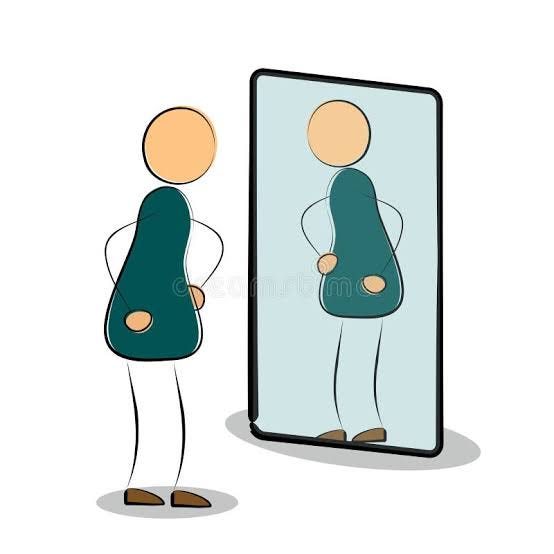
Without it, I may not have found my way so fully to accountability, which is now a compliment I give myself when I look in the mirror.
A thousand times yes Jackie and just when I thought I couldn’t love you more, you go and write this. I am going to have Chazzie read this with me. Wow. So much resonates here.
Thanks for this (former Americas researcher).